
Dark spotting and a musty smell after water
Dark Spots After a Leak in Cartersville, GA
Dark patches on drywall, a stale smell in a shut room or a corner that stays damp can show up days after a leak. Talk it through: call (678) 288-4775, then describe where the water was and how long ago.
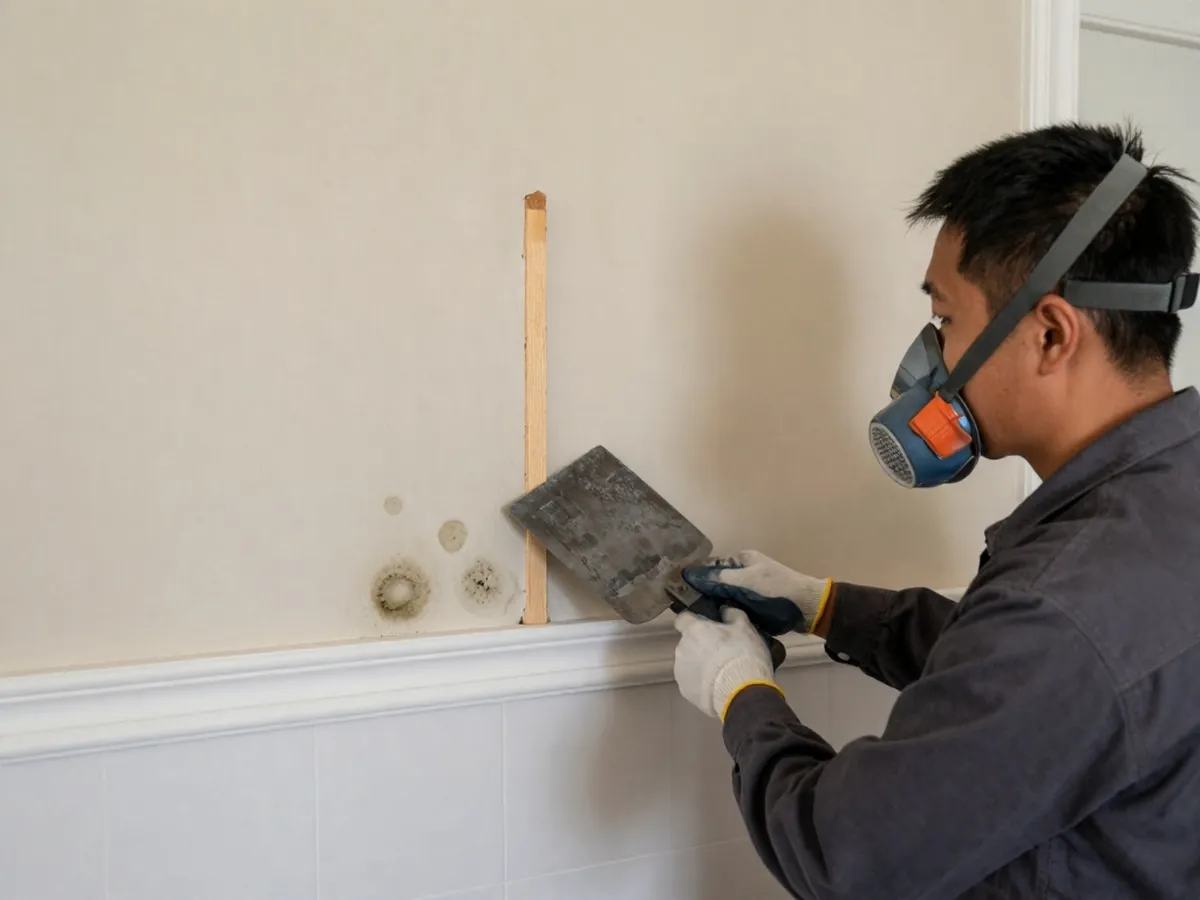
Leave and call out first if
Dark patches on a ceiling that sags or drips: stand clear of it, empty the room, and use 911 if it comes down on someone.
Damp around outlets, the panel or cords: stay on dry ground, touch no switch, and leave and use 911 at a spark.
A gas smell in a damp room: leave first, touch no switch, and phone 911 or your gas company from outside.
Anyone with asthma or allergies who reacts in the room: leave it and keep them out. CDC notes these groups may react severely.
Four habits that keep a damp room damp
Waiting to see whether it spreads. EPA's window for heading off mold is 24 to 48 hours of drying; days later is a different job.
Mixing cleaners. CDC says to use no more than 1 cup of bleach per gallon of water, and never to mix bleach with ammonia.
Closing the door on a damp room. If a flooded house stays shut up for several days, CDC says to assume mold is growing, and it wants air pushed out through a window or door.
Ordering a test first. CDC's mold page does not recommend testing.
Around Cartersville
CDC's mold page does not recommend testing, and it notes that people with asthma or allergies may react severely.
EPA uses about 10 square feet, a patch 3 feet by 3 feet, as the size to compare against. It also says to check a contractor's mold experience and references.
EPA's brief guide puts the humidity line at 60 percent, with 30 to 50 as the target. A hardware-store hygrometer shows where a room stands.
A hot July and a shut-up room
The Weather Service's summer 2025 summary for Rome shows a high of 99°F on 28 July and 11.35 inches of rain against a normal 11.31. Your street's totals may differ from Rome's.
EPA's humidity target: stay under 60 percent, and aim for 30 to 50. A closed room is hardest to hold under that line in summer, so a leak found in July is worth a hygrometer reading.
On the visit itself
Call (678) 288-4775, say where the water was and how long ago, and the contractor can arrange a visit.
A look at the dark spots, the wall behind them and the nearest water source.
A measure of the area, since EPA's dividing line between a small job and a larger one sits near 10 square feet, or 3 feet on each side.
A plan for pulling out whatever cannot be cleaned: soaked carpet, ceiling tile, drywall.
A plan to dry the space and trace the moisture to its source.
A talk about what stays, what goes and who does the rebuilding.
Sorting dark spots by size and source
Is the spotted area smaller than about 10 square feet?
EPA uses that as the size to compare against. A larger patch, or sewage-wet material, is a call to a professional.
Did sewage or floodwater cause the damp?
EPA says to call a professional experienced with it. See backed-up drains.
Does anyone in the house have asthma or allergies?
CDC says they may react severely. Keep them out of the room.
Is the material soft, such as carpet or ceiling tile?
EPA says porous materials may have to be thrown away.
Is the source still wet?
Stop the source first. See split pipes and supply-line floods.
Which materials EPA says may not come back
- CarpetOn EPA's list of porous materials that can end up in the bin
- Ceiling tileSame list
- DrywallCDC lists drywall among the items to throw away after floodwater
- Hard, non-porous surfacesThe pages here give no steps; the contractor decides
Where a damp room usually starts
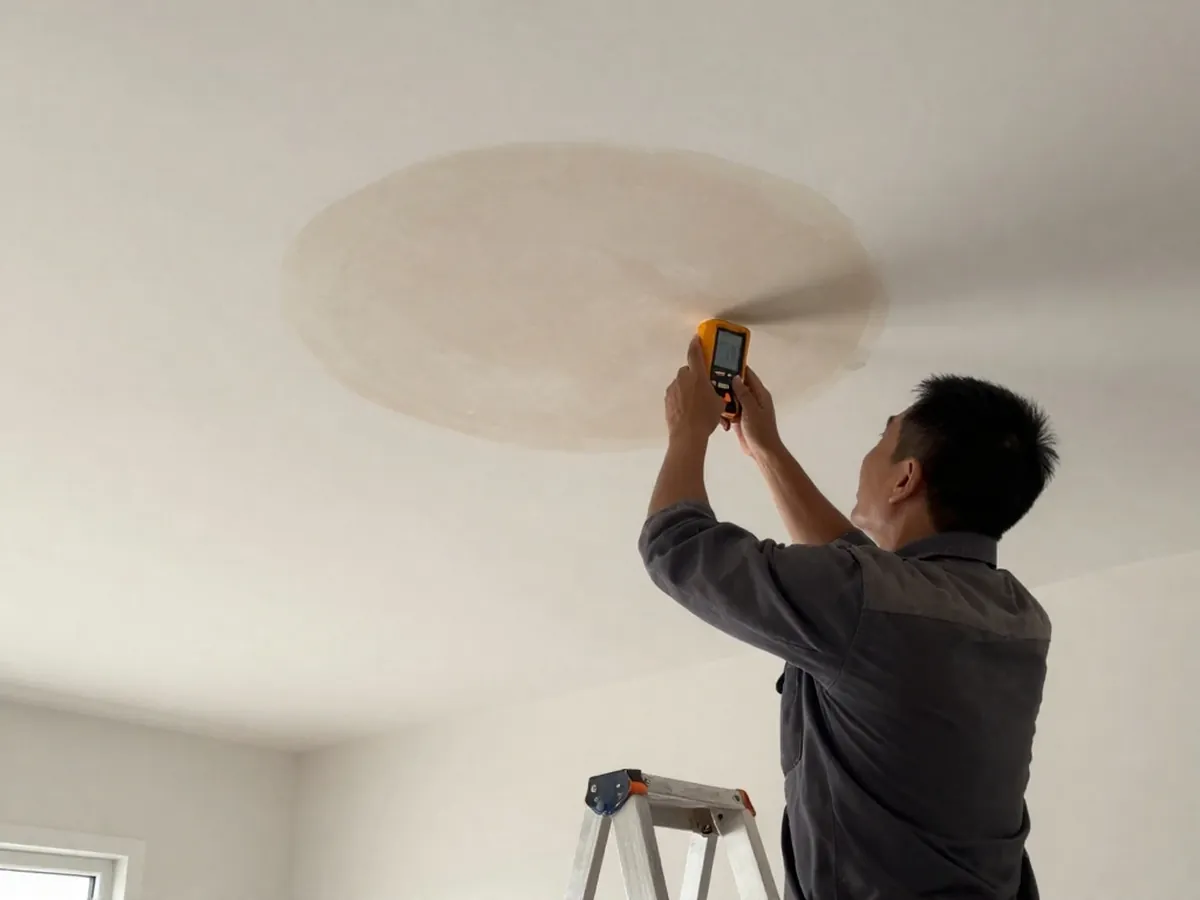 Stained, dripping or bulging ceilingsWhen the dark spots are overhead
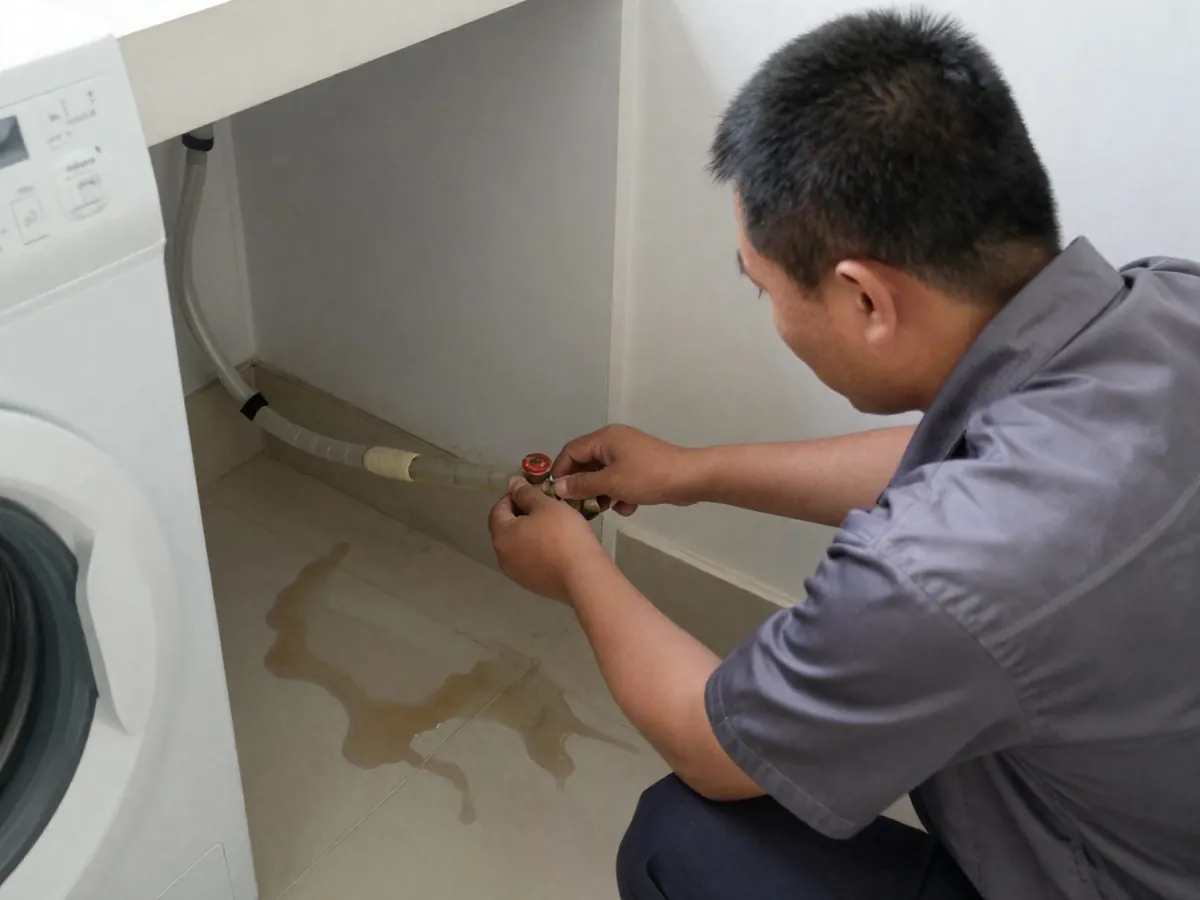 Appliance and water heater leaksWhen a slow leak sits behind a machine
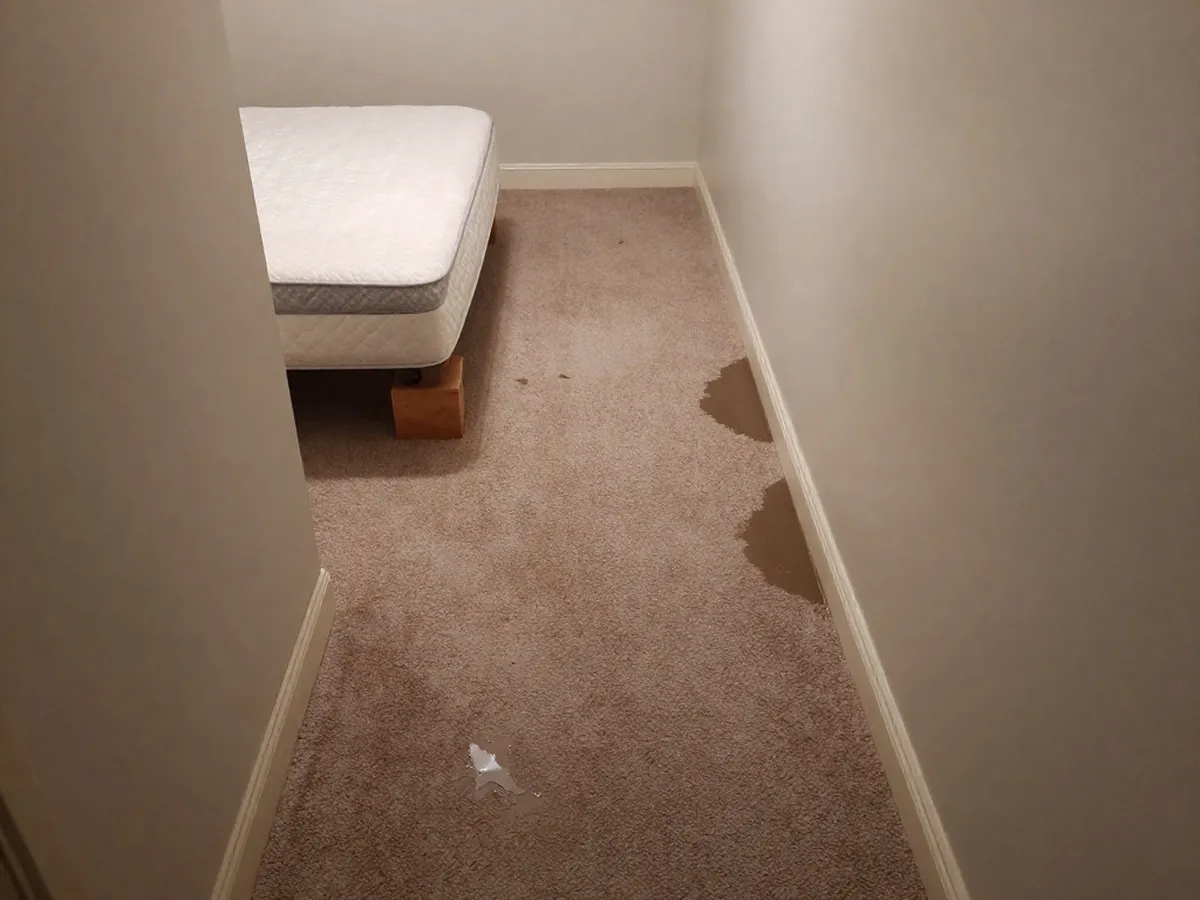 Wet basements and crawl spacesWhen the damp is below the first floor
A note before anyone starts cutting
Choosing who opens the wall
EPA's mold page says to check a contractor's mold experience and references. Georgia's contractor FAQ lists license categories, and none of them is a mold category. The hiring questions page explains what that does and does not tell you.